



 Label check
Processed vs Ultra Processed Food: Where the Line Sits
NOVA Group 3 and Group 4 are neighbors on paper and worlds apart on the label. Here is the boundary, drawn with side-by-side pairs.
Free to download on iPhone. Subscription required for Premium.
One Word of Difference, Two Very Different Foods
Public health advice spent decades using processed food as a catch-all villain, and the confusion that created still shapes how people shop. Cheese is processed. So is a Kraft Single. Canned tomatoes are processed. So is jarred cheese dip. Treating those pairs as equivalent leads people to distrust perfectly good foods while missing what actually distinguishes the problematic ones. The NOVA framework resolved this by splitting processing into two separate groups with a testable boundary between them.
NOVA Group 3, processed food, means a whole food plus culinary ingredients: something recognizable preserved or transformed with salt, sugar, oil, vinegar, or fermentation. Canned sardines in olive oil, salted butter, traditional cheddar, sauerkraut, smoked salmon, tuna in brine, bread from a bakery that uses flour, water, salt, and yeast. In every case you could name the original food while looking at the product, and you could roughly reproduce the process in a well-equipped home kitchen.
NOVA Group 4, ultra-processed food, is a different manufacturing paradigm. The food is not preserved; it is constructed. Starting materials are fractions, refined flours and starches, protein isolates, extracted oils and sugars, reassembled with additives that perform cosmetic and structural jobs: emulsifiers to bind, gums to thicken, dyes to color, flavorings to simulate taste that the base materials lost. Salt preserves a sardine; polysorbate 80, soy protein isolate, and Yellow 6 build a product.
Side-by-side pairs make the boundary concrete. Cheddar (milk, cultures, salt, rennet) versus American cheese product (milk ingredients plus sodium citrate, modified starch, annatto, and preservatives). Bakery sourdough versus shelf-stable sandwich bread with DATEM, monoglycerides, and calcium propionate. Salted peanuts versus honey-roasted peanuts coated in sugar, maltodextrin, and xanthan gum. Canned tuna in water versus tuna salad kits with soybean oil, corn syrup solids, and disodium EDTA. Plain kefir versus a strawberry drinkable yogurt with fructose, natural flavor, and carmine. In each pair, the left side is Group 3 or even Group 1; the right side crossed the line.
A practical label test captures the distinction in about ten seconds. Ask two questions. First, can I picture every ingredient as something sold on its own in a grocery store? Salt yes, vinegar yes, maltodextrin no, soy lecithin no. Second, is the original whole food still the first ingredient and still recognizable in the product? If both answers are yes, you are almost certainly looking at a processed food. One no is a warning; two is a verdict. The full group definitions are laid out in our NOVA classification guide, and the processed food list catalogs which everyday products sit in the milder Group 3.
The distinction carries real stakes because the health evidence splits along exactly this line. Large studies associate high Group 4 intake with elevated risks of obesity, type 2 diabetes, and cardiovascular disease, while several Group 3 staples, yogurt, cheese, canned fish, show neutral or protective associations in the same datasets. Collapsing both into one processed category erases the most useful signal in modern nutrition research. When a label sits in the gray zone, scan it: BerryPure applies the NOVA criteria ingredient by ingredient and tells you which side of the line the product falls on, with the deciding additives named.
Processed vs Ultra-Processed at a Glance
| Processed Food (NOVA 3) | Ultra-Processed Food (NOVA 4) | |
|---|---|---|
| Definition | Foods altered by adding salt, sugar, oil, or by canning and smoking | Industrial formulations made mostly from substances derived from foods, plus additives |
| Typical ingredient list | Short: the food plus 2 to 4 culinary ingredients | Long: 5 or more ingredients, often with additives you would not use at home |
| Marker ingredients | Salt, sugar, oil, vinegar | Emulsifiers, sweeteners, colourings, flavourings, modified starches, protein isolates |
| Examples | Canned vegetables, cheese, fresh bread, smoked fish, cured meats | Soft drinks, packaged snack cakes, instant noodles, reconstituted meat products, many cereals |
| Health evidence | Fine in moderation as part of a whole-food diet | Consistently linked to obesity, type 2 diabetes, and cardiovascular disease in large cohort studies |
| What to do | Watch salt and sugar amounts | Limit where you can; scan labels to spot NOVA-4 markers |
 How it works
How BerryPure Draws the Line for You
 1
1Scan both candidates at the shelf
Comparing a jarred sauce against a canned one, or two breads? Scan each. BerryPure reads the full ingredient list and evaluates every entry against the NOVA criteria.
 2
2See which side of the boundary each falls on
Each product gets an explicit group placement, processed or ultra-processed, along with the specific ingredient that tipped it over, so the classification is never a black box.
 3
3Keep the Group 3 version, replace the Group 4 one
The goal is not avoiding processing altogether. When two similar products split across the line, BerryPure makes the better half of the pair obvious in a single glance.

 Cleaner swaps
Cross-the-Line Pairs: Group 4 Back to Group 3

American cheese singles (sodium citrate, modified food starch, annatto, sorbic acid)
Block cheddar or Swiss, sliced at home
Traditional cheese is milk, cultures, salt, and rennet, a textbook Group 3 food. Cheese product is an emulsified reconstruction that needs melting salts to hold together.

Tuna salad kit with soybean oil, corn syrup solids, and disodium EDTA
Canned tuna in olive oil mixed with mustard and capers
Plain canned tuna is preserved fish, nothing more. The kit adds a sweetened, stabilized dressing engineered for months of shelf life.

Strawberry drinkable yogurt with fructose, natural flavor, and carmine
Plain kefir or plain yogurt blended with real strawberries
Fermented plain dairy is one of the best-supported Group 3 foods in nutrition research. The flavored version buries it under a sweetener and coloring system.
Honey-roasted peanuts coated in sugar, maltodextrin, and xanthan gum
Dry-roasted peanuts with sea salt
Roasting and salting keep peanuts in simple processed territory. The coating is a constructed candy shell that turns a snack into a formulation.
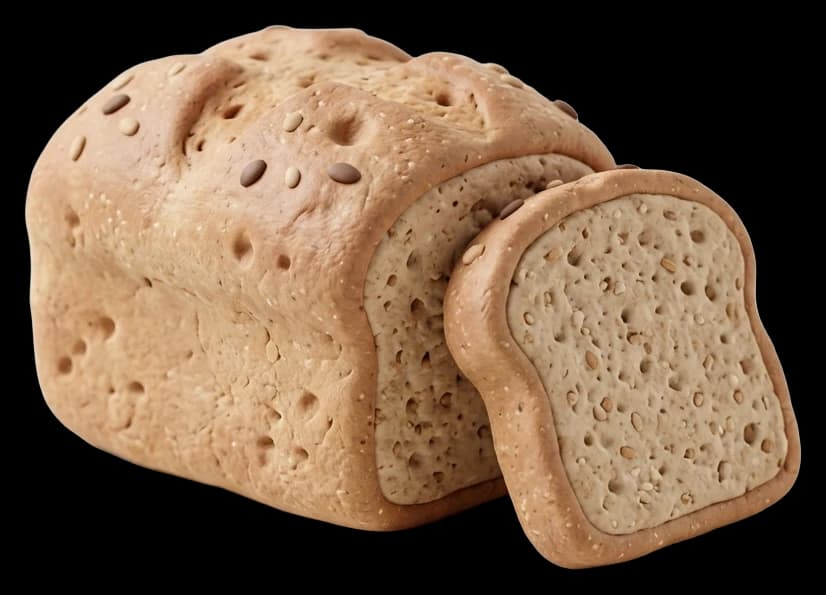
Shelf-stable sandwich bread with DATEM, monoglycerides, and calcium propionate
Bakery bread made from flour, water, salt, and yeast
Both are bread, but only one requires industrial dough conditioners. Freeze the bakery loaf sliced and it matches the shelf life advantage too.
Instant flavored grits with partially hydrogenated oil and artificial cheese flavor
Stone-ground grits cooked with butter and real cheese
The base grain is nearly identical. The instant packet swaps real dairy for a hydrogenated fat and flavor compound to survive the pantry.
Frequently askedquestions
Everything you need to know about scanning your food with Berry Pure.
What is the difference between processed and ultra processed food?
Processed food (NOVA Group 3) is a recognizable whole food altered with culinary ingredients like salt, sugar, oil, or fermentation, for example cheese, canned fish, or sauerkraut. Ultra-processed food (Group 4) is manufactured from food fractions and industrial additives such as emulsifiers, protein isolates, and dyes, with little intact original food remaining.
Is processed food bad for you like ultra-processed food is?
The evidence treats them very differently. Consistent associations with obesity, diabetes, and heart disease attach to ultra-processed intake specifically. Group 3 staples like yogurt, cheese, and canned fish show neutral or favorable associations in the same studies, though salt-heavy items warrant moderation for blood pressure.
What is the quickest label test to tell them apart?
Ask whether every ingredient is something you could buy on its own at a grocery store, and whether the original food is still the first and dominant ingredient. Two yes answers point to processed; ingredients like maltodextrin, soy lecithin, or artificial flavor point to ultra-processed.
Where do NOVA Groups 1 and 2 fit into this comparison?
Group 1 is unprocessed and minimally processed food, like fresh vegetables or plain oats. Group 2 is culinary ingredients, oil, butter, salt, sugar, used to cook Group 1 foods. Groups 3 and 4 are what result when those inputs are combined, which is why the processed versus ultra-processed line is drawn between them.
Can a processed food become ultra-processed with one ingredient?
Effectively yes. Under NOVA, the presence of ingredients exclusive to industrial manufacturing, an emulsifier, a flavor enhancer, a protein isolate, reclassifies the product. That is why two nearly identical breads or yogurts can land in different groups over a single line on the label.
Are smoked and cured meats processed or ultra-processed?
Traditional versions, like ham cured with only salt or fish smoked over wood, are Group 3. Most commercial versions add sodium nitrite, phosphates, dextrose, and flavorings, which pushes them into Group 4. This category shows more brand-to-brand variation than almost any other, so the label decides.

See what’s really
in your food
Scan your first label in seconds and start making cleaner choices across your whole kitchen.
Free to download. Subscription required for Premium.
Berry Pure Premium is a monthly or annual subscription. Payment is charged to your Apple ID at confirmation of purchase and automatically renews unless cancelled at least 24 hours before the end of the current period. Manage or cancel anytime in your App Store account settings.