



 Label check
Seed Oils to Avoid: A Label-Reading Guide
Industrial seed oils hide in almost every packaged food. Learn which ones to watch for and let BerryPure flag them the moment your camera hits the label.
Free to download on iPhone. Subscription required for Premium.
Which Seed Oils Show Up Most on Labels, and Why It Matters
If you have started paying attention to ingredient panels, you have probably noticed that a handful of oils appear over and over: soybean oil, canola oil, sunflower oil, corn oil, and cottonseed oil, several of which the American Heart Association lists among its recommended cooking oils. These are the seed oils to avoid according to a growing community of consumers and researchers who question whether their high omega-6 linoleic acid content contributes to chronic inflammation when consumed in the quantities typical of modern diets, though the AHA says the current evidence does not support avoiding them.
These oils became ubiquitous not because of nutritional merit but because of economics. Soybean oil alone accounts for roughly 70% of edible oil consumption in the United States. It is extracted using hexane, a petroleum-derived solvent, then refined, bleached, and deodorized to remove the off-flavors that chemical processing creates. The finished product is cheap, neutral-tasting, and shelf-stable, ideal for food manufacturers, less ideal for anyone trying to eat closer to nature.
Identifying these oils in practice requires vigilance. They appear in products that seem healthy on the surface: whole-grain crackers, roasted nuts, hummus, canned tuna packed in oil, and baby food. The front of the package might say "made with olive oil," but the ingredient list reveals soybean oil is the primary fat, with olive oil added in trace amounts for marketing purposes. BerryPure cuts through that ambiguity by reading the actual ingredient list and calling out every seed oil present.
 How it works
How BerryPure Catches Seed Oils You Might Miss
 1
1Photograph the Ingredient Panel
Open BerryPure and point your camera at the ingredient list. The app processes it using on-device OCR, nothing gets uploaded and no internet connection is needed.
 2
2See Every Seed Oil Called Out
Soybean, canola, corn, sunflower, safflower, cottonseed, grapeseed, and rice bran oil are all flagged in red, regardless of where they appear in the ingredient order.
 3
3Understand the Full Fat Profile
BerryPure notes whether the seed oil is listed as a primary ingredient or buried in a sub-ingredient (like the oil in a seasoning blend), so you can gauge actual exposure.
- 4
Swap to Seed-Oil-Free Products
The app suggests alternatives in the same product category that rely on olive oil, avocado oil, coconut oil, or animal fats instead of seed oils.

 Cleaner swaps
Practical Swaps to Eliminate Seed Oils

Tortilla chips fried in corn or sunflower oil
Tortilla chips cooked in avocado oil or coconut oil
Several brands now offer avocado-oil chips with comparable taste and crunch. The fat source is the only meaningful difference.
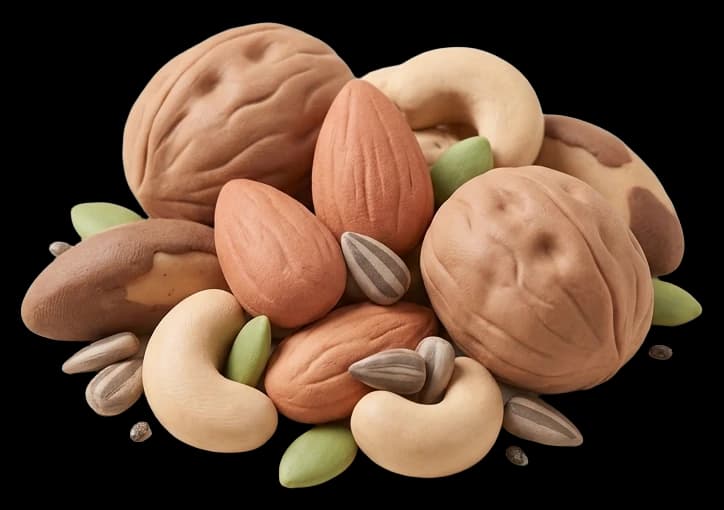
Roasted mixed nuts with soybean or peanut oil added
Dry-roasted or raw nuts with just salt
Nuts already contain their own healthy fats. Adding soybean oil is a cheap manufacturing shortcut that introduces unnecessary omega-6.

Commercial hummus with canola or soybean oil
Hummus made with extra-virgin olive oil (or homemade with tahini and EVOO)
Traditional hummus uses tahini and olive oil. The canola swap is a cost-cutting measure that changes the fat composition significantly.

Frozen stir-fry vegetables with a soybean-oil-based sauce packet
Plain frozen vegetables stir-fried at home in avocado oil with soy sauce and ginger
Pre-sauced frozen meals almost universally use soybean oil. Buying plain vegetables and seasoning yourself takes the same amount of time.
Canned tuna packed in vegetable oil (typically soybean)
Canned tuna packed in olive oil or water
Olive-oil-packed tuna adds beneficial monounsaturated fat. Water-packed is the lightest option. Both avoid the soybean oil default.
Frequently askedquestions
Everything you need to know about scanning your food with Berry Pure.
What are the main seed oils to avoid?
The most frequently cited seed oils to avoid are soybean oil, canola (rapeseed) oil, corn oil, sunflower oil, safflower oil, cottonseed oil, grapeseed oil, and rice bran oil. All are industrially refined using high heat and chemical solvents, and all are high in omega-6 linoleic acid relative to omega-3 fatty acids.
Why is soybean oil in so many products?
The United States is one of the world's largest soybean producers, making soybean oil extremely cheap and widely available. Its neutral taste and long shelf life make it a default choice for food manufacturers looking to minimize cost. It appears in everything from bread to baby formula to restaurant fryers.
Is olive oil a seed oil?
No. Olive oil is pressed from the fruit of the olive tree, not from a seed. It is mechanically extracted, which preserves polyphenols and antioxidants. Extra-virgin olive oil, the least processed grade, is widely regarded as one of the healthiest cooking fats available.
Can I eat out and still avoid seed oils?
It is difficult. Most restaurants cook with soybean, canola, or a generic "vegetable oil" blend because of cost. Some higher-end restaurants use butter or olive oil, and a few specifically market themselves as seed-oil-free. Your best strategy is to ask your server what oil the kitchen uses and choose dishes that are less oil-dependent, like grilled proteins and steamed vegetables.
Is peanut oil a seed oil?
Technically, peanuts are legumes, not seeds, so peanut oil does not fall neatly into the seed-oil category. However, refined peanut oil goes through similar industrial processing (solvent extraction, bleaching, deodorizing) and is moderately high in omega-6. Cold-pressed or roasted peanut oil retains more nutrients and is generally considered a better option.
Does BerryPure flag 'vegetable oil' as a seed oil?
Yes. The term "vegetable oil" on a US label almost always refers to soybean oil, and BerryPure treats it accordingly. If the label specifies a different source, like "vegetable oil (palm)", the app flags it based on the actual oil named. Ambiguous labeling is highlighted so you can make an informed decision.




See what’s really
in your food
Scan your first label in seconds and start making cleaner choices across your whole kitchen.
Free to download. Subscription required for Premium.
Berry Pure Premium is a monthly or annual subscription. Payment is charged to your Apple ID at confirmation of purchase and automatically renews unless cancelled at least 24 hours before the end of the current period. Manage or cancel anytime in your App Store account settings.